The industry norm is ~22–26 %, higher depending on brine and product; specific values are defined in the ROI conversation.
Dry-cured ham and cured products: curing and injection technology
Homogeneous salt, stable curing, maximum yield, from traditional ham to modern cured products.

Description
Raw and cured products demand uniform salt distribution, controlled water activity and a structurally stable cure. Traditional dry curing is slow, hard to reproduce and causes salt gradients, edge hardening and weight loss. MAKU technology turns it into a controlled, reproducible and profitable process.
Dry-cured ham: the core problem is the salt gradient between surface and core, alongside long maturation times and edge hardening. The control objective is a uniform salt distribution and a controlled drop in water activity (aw). The aw value is the driver of safety and shelf life.
Cured products (cooked meats): uneven brine distribution, juice release on slicing and fluctuating quality. The lever is protein extraction through vacuum tumbling (myofibrillar myosin migrates to the surface → adhesive layer → slice cohesion).
Dried meat / jerky: long drying times, hard edges with a soft core and irregular color/texture.
Industry reference figures: classic pump/pickup rate ~22–26 % of primal weight; higher with protein or starch brines. Injection cuts curing time from days/weeks to hours and precisely controls salt, pickup and functional ingredients. Low-speed tumbling (~3 rpm) with rest cycles maximizes retention and water binding.
 Process line: HVM → HPI → Tumbler R/C.
- MAK Ingredients: Curing salts / functional ingredients (performance triangle)
Higher reproducible yield (pickup control), less rejection from salt gradients, shorter cycles and better slice quality → direct margin gain.
Benefits
- Homogeneous salt distribution and controlled aw → safety and shelf life
- Reproducible pickup (~22–26 %, higher with functional brines)
- Curing time reduced from days/weeks to hours
- Better slice cohesion through protein extraction (vacuum tumbling)
- Less shrinkage and less rejection from salt gradients
Frequently asked questions

MAKU Meat Tec
Leinenbrink 10, 33824 Werther (Westf.), Germany


Applications in detail

Serrano & dry-cured ham
Homogeneous salt and stable curing, from traditional to modern ham.

Cured pork loin (lomo)
Uniform curing of the loin with reproducible pickup.

Cecina (air-dried beef)
Controlled drying without hard edges or a soft core.

Chorizo & salami
Homogeneous salt and spice distribution in cured sausages.

Cured belly & bacon
Precise salting and stable yield in cured belly.
Machines for this application
View all machines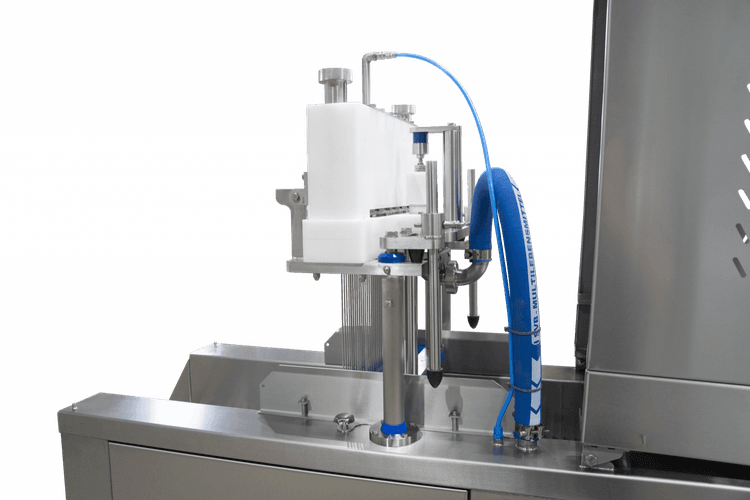
HPI Injectors
High-performance brine injection.
- Models: HPI 300 – 1000S
- Max. capacity: up to 10,000 kg/h
- Needle Ø: 1.9 / 2.5 / 3 / 4 mm
Price on requestView details
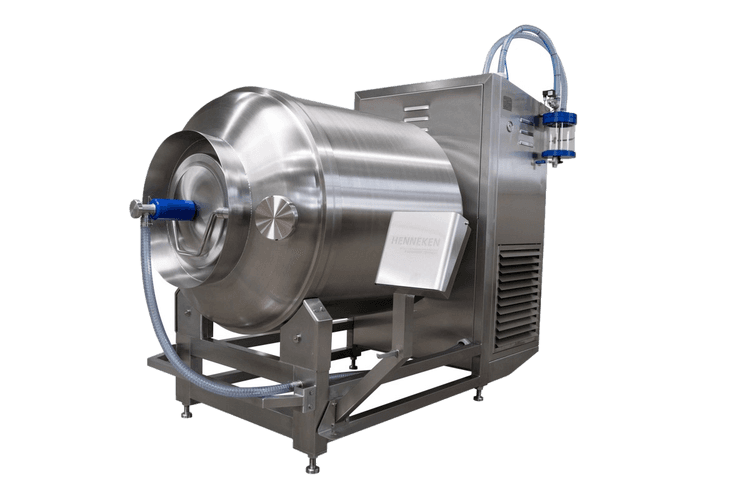
Henneken Tumblers
Uniform tumbling: consistent texture and uptake.
- Models: B1 – B12
- Volume: 650 – 12,000 l
- Speed: 0.5 – 10 rpm
Price on requestView details
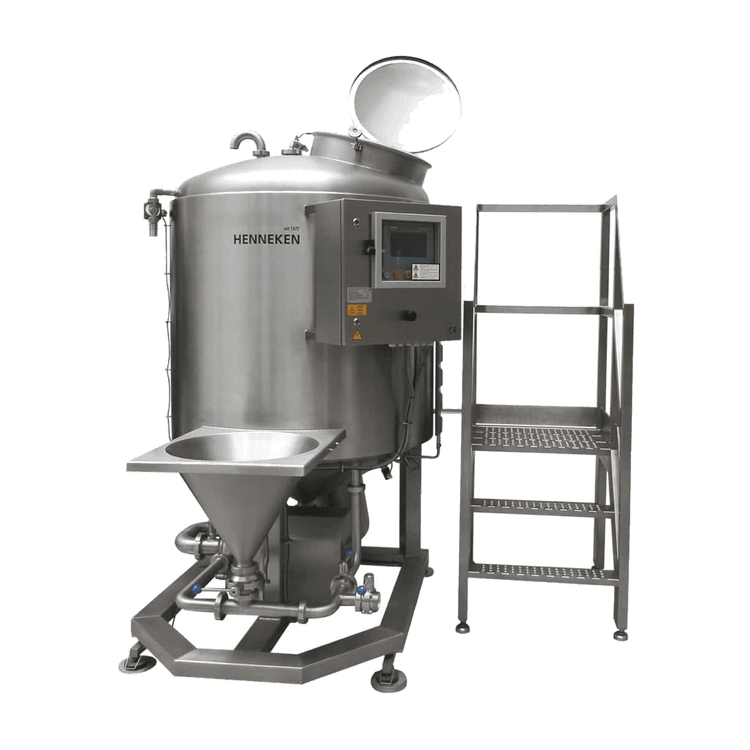
HVM Brine Mixer
The exact brine recipe for every product.
- Models: HVM 400 – 2000
- Volume: 400 – 2,000 l
- Power: 1.8 – 4.0 kW
Price on requestView details